/cloud-blob-3.webp)
/feather-3.png)
Surface bedroom temperatures across Punjab, Haryana and Delhi NCR can stay above 30°C for six hours even with an air conditioner running, because the mattress itself stores heat from the day. The difference between a "cool" mattress and a "hot" one comes down to three things: the foam type, the fabric on top, and the airflow path through the layers.
1. Why some foams sleep hot
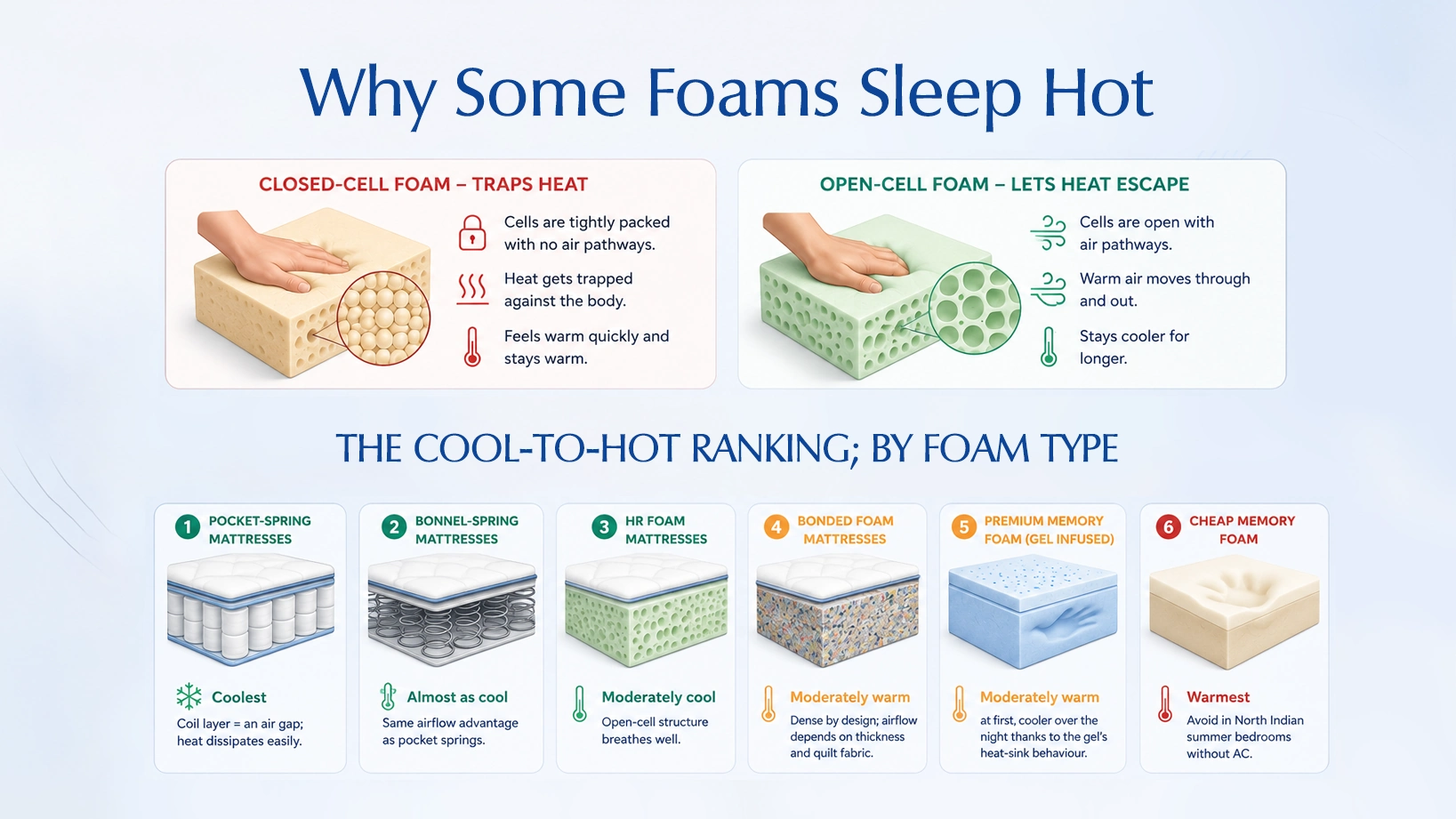
Foam structure decides almost everything. Closed-cell foams (cheap memory foams, low-density softy quilts) trap body heat against the surface like a sealed box. Open-cell foams (HR, premium memory foam) let warm air migrate through the structure and out through the sides.
If you ever pressed a hand into a cheap memory foam pillow at a roadside shop and felt your palm grow warm in seconds, that is closed-cell behaviour. A premium open-cell foam will dissipate the same heat within a minute.
The cool-to-hot ranking, by foam type
- Pocket-spring mattresses — coolest. The coil layer is essentially an air gap; body heat dissipates through the perimeter and the springs themselves do not retain heat.
- Bonnel-spring mattresses — almost as cool. Same airflow advantage as pocket springs.
- HR foam mattresses — moderately cool. Open-cell structure breathes well; cooler than memory foam, slightly warmer than spring.
- Bonded foam mattresses — moderately warm. Dense by design; airflow depends on thickness and quilt fabric.
- Premium memory foam (cooling-gel infused) — moderately warm at first, cooler over the night thanks to the gel's heat-sink behaviour.
- Cheap memory foam — warmest. Avoid in any Indian summer bedroom that does not have AC.
2. The fabric on top matters more than people think
The quilt fabric is the first surface that touches you. Its weave, fibre and finish decide whether your sweat evaporates or pools. A few notes:
- Viscose / bamboo viscose: very breathable, soft, naturally cool to touch. Common on premium Sparsh quilts. Wicks moisture away from the body.
- Cotton blends: breathable, washable (covers), good summer choice.
- Polyester jacquard: durable and decorative but warmer. Fine in winter; less ideal in May.
- Knitted spacer fabrics: 3D mesh fabric that pulls air through. Premium and very effective for hot sleepers.
3. Airflow path through the mattress
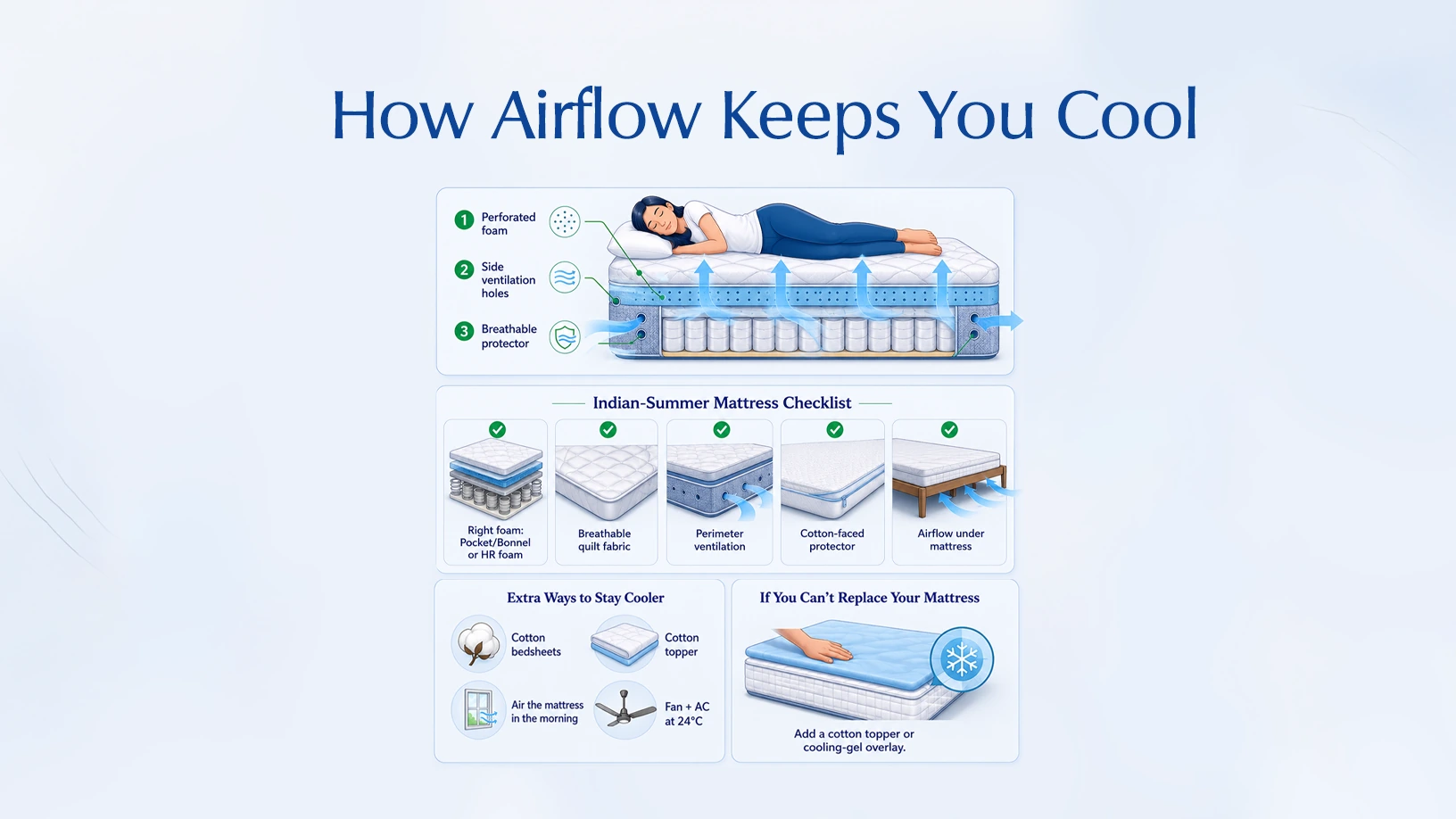
Even the right foam can sleep hot if the layers above it choke airflow. The best-performing summer mattresses have a path for air to move:
- Perforated comfort layers (small holes punched through HR or memory foam).
- Side ventilation holes around the perimeter to let trapped warm air escape sideways.
- A breathable mattress protector — never vinyl. Vinyl undoes every other cooling design choice.
Check for these features by lifting the mattress sideways and looking along the edge. If you can see small ventilation holes through the perimeter fabric, that is a good sign.
The Indian-summer mattress checklist
- Foam type: pocket-spring, bonnel-spring, or HR foam (avoid cheap memory foam).
- Quilt fabric: viscose, bamboo viscose, cotton blend, or knitted spacer.
- Perimeter ventilation: visible side holes.
- A cotton-faced, polyurethane-membrane protector (not vinyl).
- A bed frame with airflow under the mattress — slatted is best, solid storage box is worst.
Things that help beyond the mattress
- Cotton bedsheets, ideally percale weave or 200–300 thread count. Higher thread count is not always cooler; weave matters more than the marketing number.
- A cotton mattress topper if you cannot replace the mattress yet — adds a breathable buffer.
- Air the mattress in the morning. Even ten minutes of stripping the bed before you make it lets accumulated heat escape.
- Run the ceiling fan with AC at 24°C rather than AC at 21°C without a fan. The moving air feels 2–3°C cooler than the actual setting and dries any sweat the mattress is holding.
If you cannot replace your mattress this summer
Quick wins, in order of effectiveness:
- Add a cotton-faced mattress protector if you do not have one.
- Switch to percale cotton bedsheets.
- Replace any vinyl protector immediately — it is undoing whatever cooling your mattress has.
- Move the bed away from south- or west-facing walls during peak summer if possible. The wall behind the headboard radiates heat for hours after sunset.
The best summer mattress in India is one your body can dump heat into and forget about. Look for airflow first, and let everything else follow from there.
Cool sleeping, year round
Sparsh designs every model with Indian summers in mind. Our pocket-spring Vibrant series and breathable HR-foam Bodycare range are good starting points.
See Cooling Models