/cloud-blob-3.webp)
/feather-3.png)
The "rule of 8" used in the industry — replace your mattress every 8 years — is a useful starting point but not the whole truth. A well-built bonded-foam mattress with care can hit 12. A neglected memory foam can fail at 5. The signs your mattress is sending you are more reliable than the calendar.
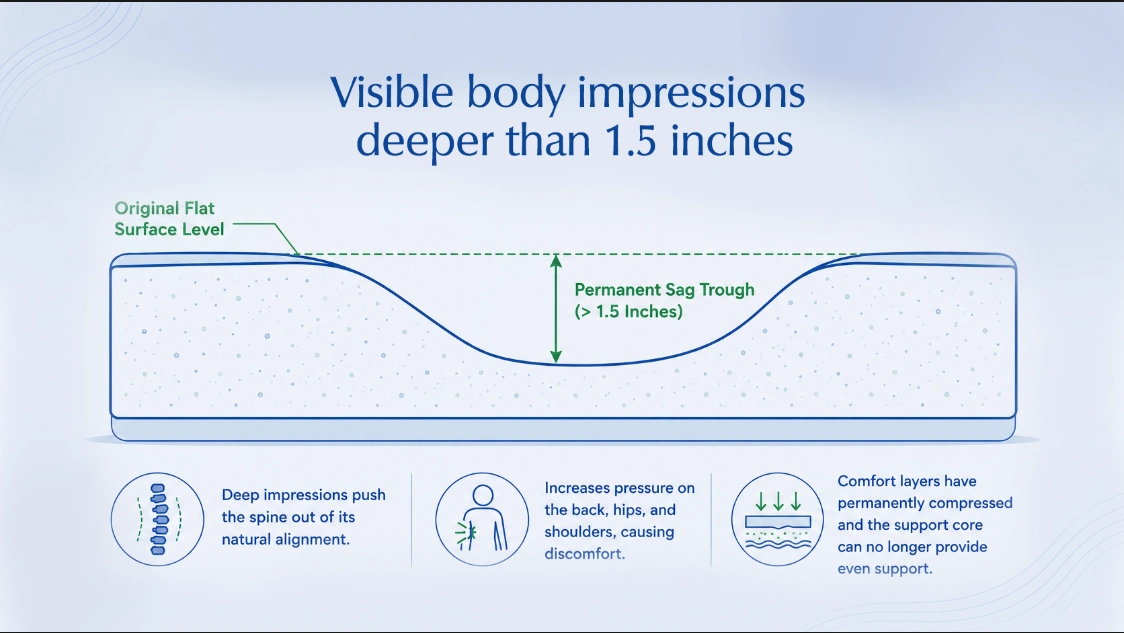
1. Visible body impressions deeper than 1.5 inches
Strip the bed completely and look at the mattress in raking light from the side. Is there a clear "trough" where you usually sleep? An impression below 1 inch is normal wear; above 1.5 inches means the comfort layers have failed and the support core is no longer supported evenly. The mattress will not recover.
2. You wake with new aches you did not have a year ago
Lower-back stiffness, shoulder pain, hip soreness — particularly when these fade after 30 minutes of being up. If your body wakes worse than it sleeps, the mattress has probably stopped supporting your spine in alignment. Test by sleeping on a different bed (a hotel, a relative's home) for two nights. If you wake fine there, your mattress is the cause.
3. Sagging or a hammock effect at the centre
Place a straight-edge (a wooden ruler or broom handle) across the mattress lengthwise. Look for gaps between the straight-edge and the mattress surface. More than 2 cm of sag at any point means the support layer has lost its integrity.
4. Allergies, sneezing, or skin irritation that improves when you travel
Older mattresses accumulate dust mites, skin cells and microscopic moisture. If you wake with a blocked nose, itching skin or eye irritation that fades during a hotel stay or holiday, the mattress is a likely contributor. A protector slows this; once it has set in, however, replacement is usually needed.
5. Springs you can feel through the surface
For spring mattresses: if you can feel individual coils through the comfort layer with a normal hand press, the foam padding above the coils has compressed past its useful life. The mattress will continue to fail unevenly from here.
6. Visible damage or warranty-voiding events
- Tears, rips or open seams at any point.
- Visible mould or mildew (often around the perimeter, where moisture collects).
- A heavy stain that has soaked through the protector into the foam.
- A "fold line" — typically from someone folding the mattress for transport, even years ago.
Any of these mean the mattress is structurally compromised even if it still feels usable.
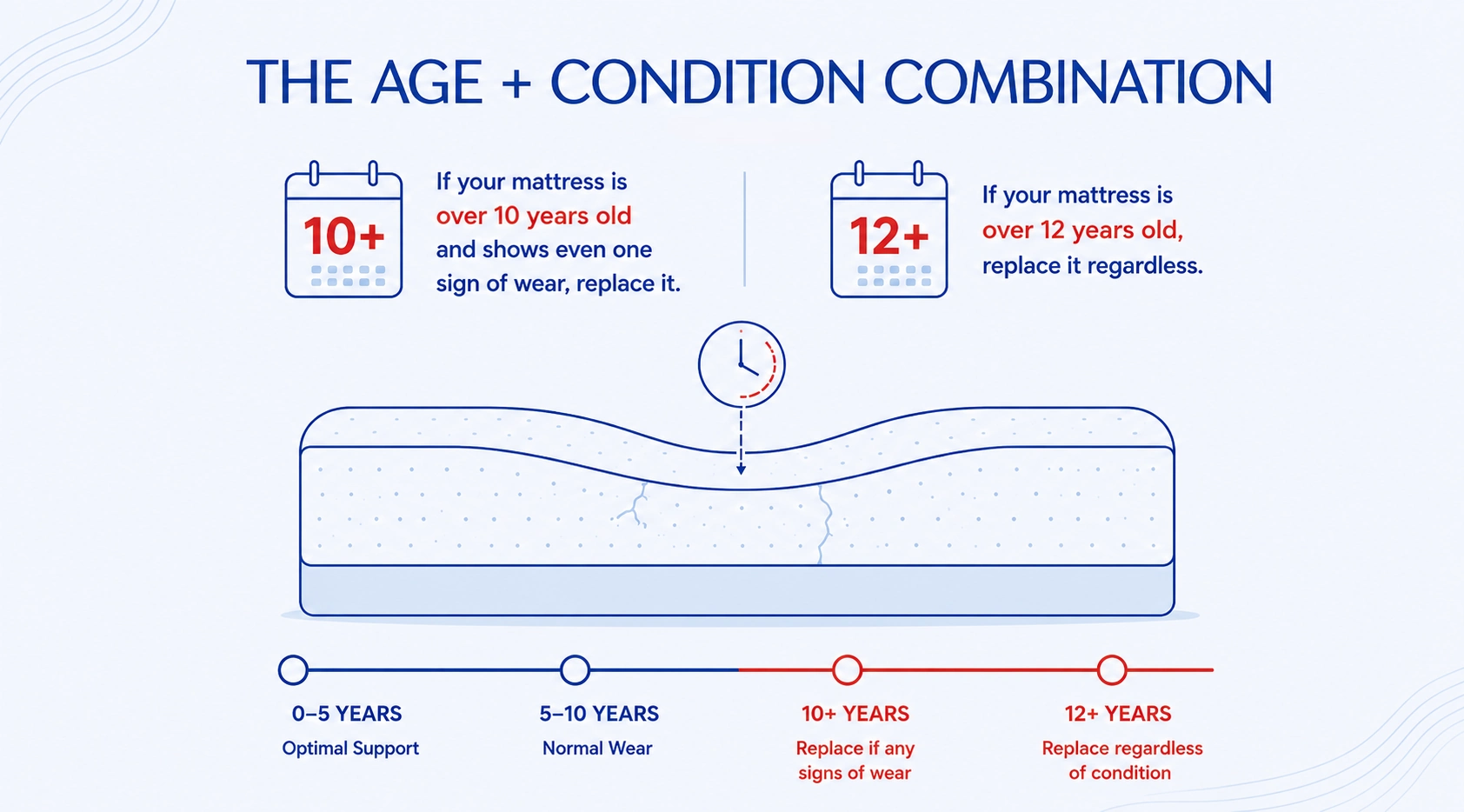
7. The age plus condition combination
If your mattress is over 10 years old and shows even one of the signs above, replace it. If it is over 12 years old, replace it regardless. Foam, fabric and bonded layers all degrade with time even when stored well; the surface that felt fine yesterday can fail within months at this age.
What to do before you buy a new one
- Photograph and measure the existing mattress (and the bed frame interior). Take both with you to the dealer.
- Note what you have liked and disliked about the current mattress — too soft, too hot, sagging, sore neck. These shape what you should look for next.
- Read our complete buying guide for the full decision framework.
- Ask the dealer about disposal — most dealers will take the old mattress away on delivery, often for free or a token charge.
A mattress that has stopped supporting you is not saving you money — it is silently charging you in lost sleep, daytime fatigue and morning stiffness. Replace once, sleep right.
Time for a new one?
Contact us with your city — we'll route you to your nearest authorised Sparsh dealer across Punjab, Haryana, J&K, Delhi NCR, Uttar Pradesh, Uttarakhand, Rajasthan or Gujarat for a no-pressure consultation and in-person feel test.
See Mattresses